

 Vi
Vi

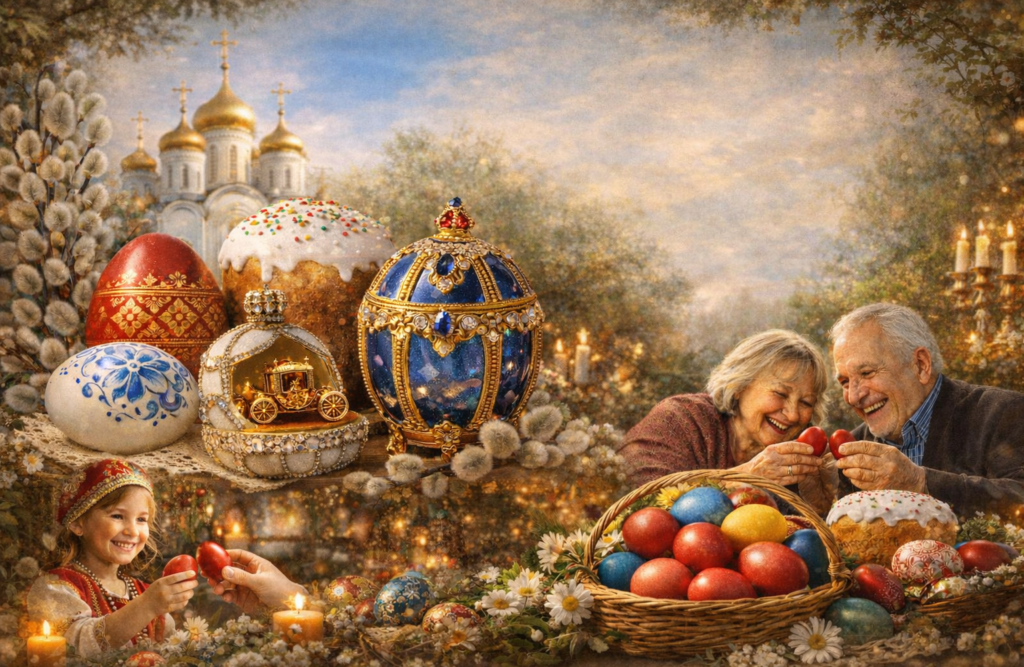
(The Story Behind Russian Easter Eggs)
In the land of birch trees, spring never arrives in a hurry… Here, it comes slowly, gently and quietly, after a long and harsh winter. And when spring finally knocks on the door, Russians mark the moment with Easter – the most sacred and important holiday of the year in the Russian Orthodox tradition.
On this special day, one item appears in almost every household, from cities to rural villages: Easter Eggs.
A Symbol Rooted in Faith
An egg is a familiar object, with a hard, closed shell on the outside and a “seed of life” waiting to emerge within. In Orthodox Christianity, the egg therefore symbolizes rebirth, hope, and the triumph of life over death – much like the resurrection of Christ.
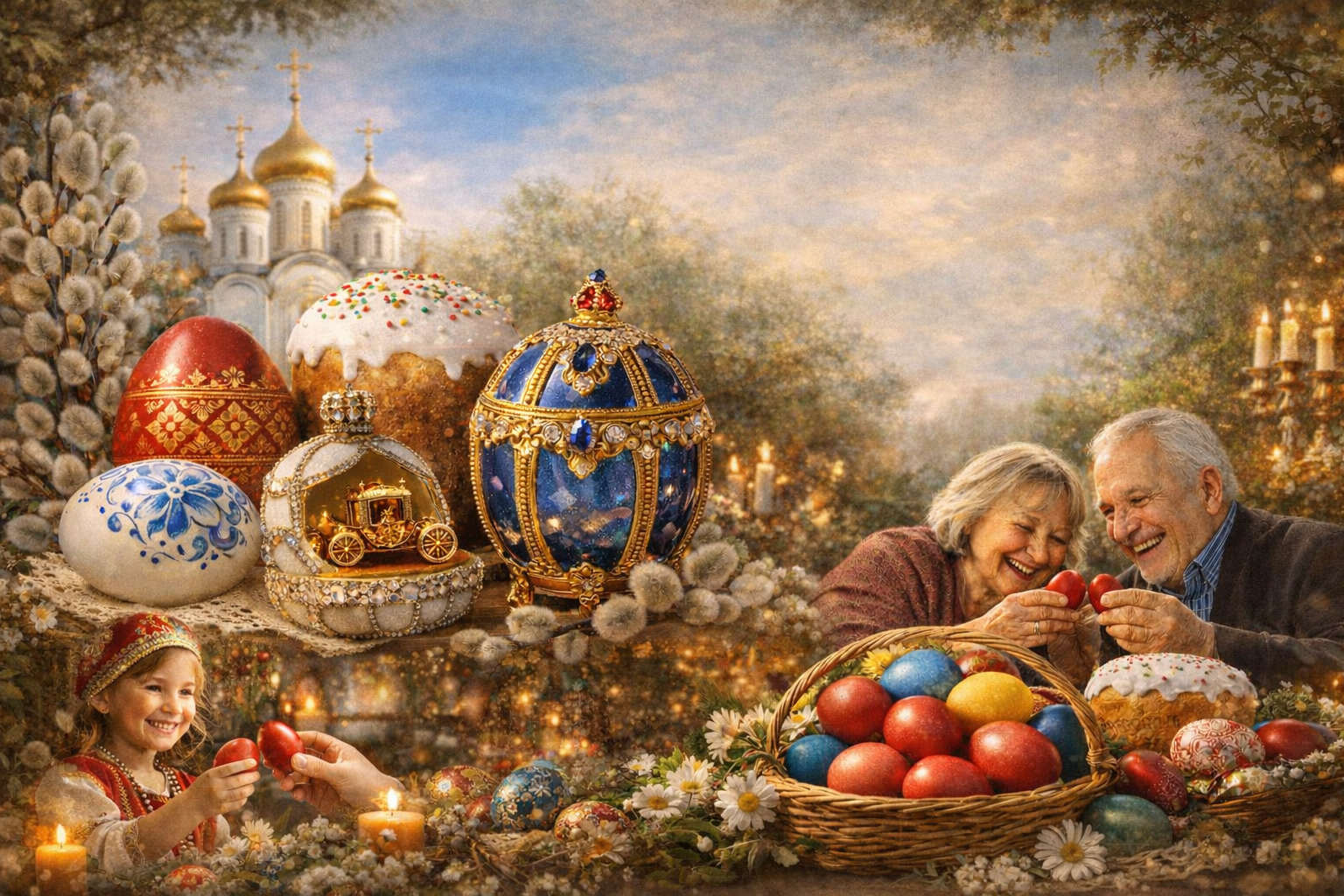
Since the 10th century, when Orthodox Christianity was introduced and spread across Russia, people have maintained the tradition of boiling eggs, dyeing them in vibrant colors, and bringing them to church to be blessed during Easter. Afterwards, these eggs are placed respectfully on the festive table or given to loved ones as a wish for peace and happiness.
On Russian Easter Eggs, Colors Are More Than Decoration…
In Russian culture, red is the most traditional color of Easter eggs. It symbolizes faith, happiness, and love, and also represents life and rebirth – something Russians deeply cherish after a long winter covered in snow.
Over time, Russian Easter eggs have appeared in many different colors and creative patterns, yet the core meaning of a hopeful new beginning has been preserved through generations.
From Simple Eggs to Works of Art…
Unlike in many other cultures, Russians do not see Easter eggs merely as food. Instead, they have transformed them into handcrafted and artistic objects shaped like eggs, reflecting both aesthetic taste and deep cultural heritage.
From wooden eggs and finely glazed porcelain pieces to chocolate eggs wrapped in shiny foil for children, all of them carry the spirit of Russian culture and meaningful spiritual values.